SR22 insurance (also known as FR-44 in Virginia and Florida), while not technically an insurance policy, is a document proving that you have adequate coverage. Your insurance provider issues an SR22 along with the insurance policy after being convicted of a serious traffic violation. It’s the only way you can keep driving with a criminal record.
As the document holder, you’ll be responsible for preventing anything untoward from happening during the period. Meanwhile, your insurance provider will be responsible for informing the Department of Motor Vehicles (DMV) that you’re under SR22 and if it’s about to lapse. Committing any violation or allowing the SR22 to expire will result in getting your driving privileges revoked.
If you found yourself charged with the following traffic violations, contact your insurance provider to arrange your SR22 as soon as possible.
1. Driving Under the Influence/While Intoxicated (DUI/DWI)
Source: confirmbiosciences.com
Though the public uses these two terms interchangeably, DUI and DWI are two different offenses from a legal standpoint. Driving under the influence can either mean alcohol or drugs, whether prescription or illegal. Driving while intoxicated (or impaired) usually involves alcohol alone, but some states have also included drugs or sleepiness. The fine line has all but disappeared in recent years.
Nevertheless, both offenses warrant an SR22 because of their gravity. A first-time DUI/DWI is a misdemeanor; in some states, a second-time DUI/DWI is also a misdemeanor. Subsequent offenses become a felony. If the DUI/DWI caused severe injury or death, it’s a felony no matter how many times committed. Some states can charge an intoxicated passenger, even if they’re not on the wheel.
2. Reckless Driving
While conditions vary by state,
is usually driving with willful disregard for people or property. Many offenses qualify as reckless driving, ranging from illegally passing a school bus to speeding. A reckless driving conviction carries lesser penalties than a DUI/DWI, which is why it isn’t unusual for people to plead to bring a DUI/DWI conviction down a peg.
Like DUI/DWI, however, reckless driving still warrants an SR22 because of its gravity. Typically a misdemeanor, reckless driving can be considered a felony depending on aggravating factors such as casualties or fleeing from the scene.
3. Distracted Driving
Source: safewise.com
Unlike DUI/DWI and reckless driving, distracted driving as an offense varies wildly by state. Here are some quick facts about the state laws from the Governors Highway Safety Association based on its January 2024 Distracted Driving Laws by State chart:
Handheld gadgetry bans are present in 24 states plus Washington, D.C.
Cellphone bans for school bus drivers are present in 20 states plus Washington, D.C.
Cellphone bans for novice drivers are present in 38 states plus Washington, D.C.
Text messaging bans for all drivers are present in 46 states plus Washington, D.C.
Missouri’s only statewide distracted driving law is a text messaging ban on novice drivers.
Montana has no statewide distracted driving laws as of this writing.
The use of electronic gadgets while on the wheel isn’t the only cause of distracted driving. A driver distracted by their immediate environment (i.e., looking away from the road, creaking on your car) can also qualify. Visit this page to know more about distracted driving.
Although it can result in imprisonment in some states, distracted driving usually results in a hefty fine. However, authorities still require people with such violations to get an SR22 because they pose a substantial risk to others.
4. At-Fault Accidents
As long as you carry personal injury protection (PIP) or no-fault coverage, you won’t be held liable for accidents. However, only 23 states are considered no-fault states—17 states require PIP while five states and Washington, D.C. deem it optional. An accident that occurs in any of the remaining 27 at-fault states will demand accountability.
Settling at-fault accidents involves knowing who’s more at fault. There are three ways to do this, again depending on the state:
Comparative Negligence – Both parties can recoup expenses from each other depending on how much each is liable for the accident. For example, if one party is 55% responsible, that party’s insurance provider must pay 55% of the accident’s cost.
Modified Comparative Negligence – One party can’t recoup expenses from the other if the former is more than 50% responsible for the accident. Most at-fault states employ this form of at-fault settlement.
Contributory/Pure Negligence – One party can’t recoup expenses from the other party if it bears a degree of responsibility, no matter how much. In this case, the only way to do so is to be completely innocent in the accident.
Regardless of the at-fault settlement, an SR22 is needed if you’re partly or mostly responsible for the accident. Similar to distracted driving, authorities will see you as a considerable risk to others on the road. Even accidents in no-fault states require an SR22.
Only five states currently don’t require an SR22: Delaware, Kentucky, Minnesota, New Mexico, and Oklahoma.
5. Driving Without Insurance
Source: thesimpledollar.com
Nearly all states plus Washington, D.C. require car owners to get insurance. Even New Hampshire and Virginia—the two states not making car insurance mandatory—demand that car owners have the financial capability to compensate people they injure or properties they damage. In getting SR22, you’re also proving your financial responsibility through your ability to maintain your insurance policy.
The minimum coverage varies for each state, ranging from USD$10,000 to USD$250,000, but has three primary terms of coverage: bodily injury per person, bodily injury per accident, and property damage per accident. Other terms of coverage include PIP uninsured/underinsured coverage, and medical and funeral expenses.
6. Repeat Traffic Violations
Regardless of the severity of the violation, committing them too often at a given time will demand an SR22. Authorities keep track of the tickets drivers accrue over a period, so they can determine who has more risk on the road. How many is too many is for them to decide, so there’s no number set in stone. The best way to avoid this is to follow traffic laws always.
Conclusion
Many Americans still need their cars even if they have their licenses revoked. It’s the only way for them to get to work or run errands. SR22 insurance makes sure that their driving privileges remain with them no matter the violation, provided they avoid causing trouble again.
A relatively modern concept, electric bikes are one of the savviest and elegant ways to travel. Not only do they add a prominent pizzazz to your lifestyle, but there are plenty of realistic and valuable benefits tied to them.
Physical activity has been a part of human nature since, well, forever. As society developed, it grew with it in different ways.
Table could not be displayed.
That’s why we have so many sports today. From football to swimming to skydiving, there’s something for everyone.
Although all these sports appear completely different, they have one thing in common- adrenaline. One of the most adrenaline-inducing things is mountain bikes, of course! It’s also very challenging and involves a lot of skill, which is an added bonus.
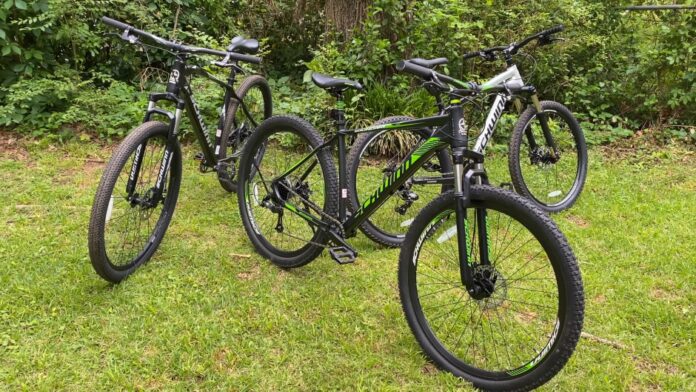
Though they can be rather expensive, and it’s hard to find the best mountain bikes under 300.
Top Rated Best Mountain Bikes Under 300 Dollars Comparison
No products found.
It’s a bit less challenging to find MTB under 500 dollars, but the real beauties you can find for such a steal can prove to be the best bikes you’ve ever owned.
Contrary to popular belief, such a thing exists! In order to learn something new about mountain bikes and to find those hidden gems on the market all you have to do is stick to this article.
Though, keep in mind that each mountain bike is special and that you’ll need to choose one according to your needs. Thankfully, there’s plenty to choose from!
10 Best Mountain Bikes Under 300 Dollars Reviews
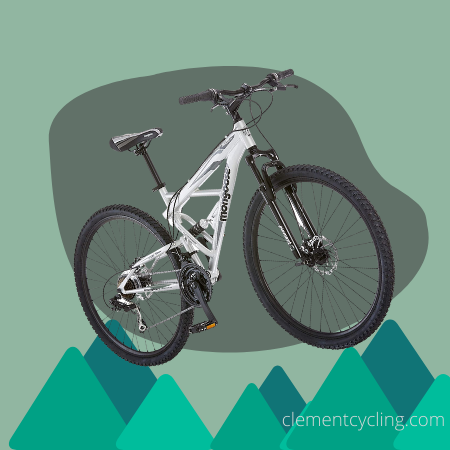
1. Mongoose R2780 Impasse Dual Full Suspension Bicycle
If you’re just starting out with mountain bikes, the Mongoose will be ideal for you. It’s great for building confidence and skill until you’re ready to take up something more challenging.
It’s able to provide such experiences due to the overall softness. Don’t be fooled though; you’ll still be able to cover all sorts of terrains.
The frame is made out of aluminum and is solid. It will be able to support you while handling the track beneath it with no issues. It might be a bit heavier than other beginner bikes on the market; the bike offers all the control you will want and need while riding it.
Plus, you’ll be able to ride it regardless of the weather conditions. Finally, let’s not forget how durable aluminum is. The bike will last you a lifetime if you take care of it properly.
With its frame and full suspension being its biggest assets, you might have just encountered the best MTB under 300.
Some Features Of This Mongoose R2780
The aluminum frame maximizes comfort.
Quick release front wheels.
Rear disc breaks.
21 speeds.
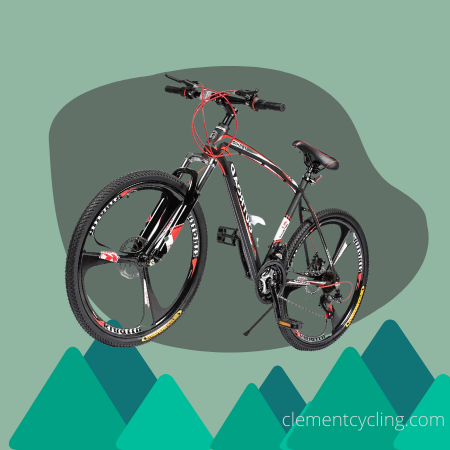
2. Merax Finiss 26″ Aluminum 21 Speed Mountain Bike With Disc Brakes
For those looking for a cross-country mountain bike but not willing to spend a lot of money, the Merax Finiss is a perfect choice.
Anyone who knows anything about mountain bikes will tell you that a good cross country bike needs to ride smoothly, to have dependable and strong breaks, and to have good suspension. Will this mountain bike has it all.
Another factor you need to consider when purchasing a mountain bike is the speed. Basically the more options for speed you have, the better. That’s why this baby has 21 possible speed controls.
It’s extremely convenient and easy to switch between them, too, as you have the Shimano system in your hands. For those who don’t know, the Shimano is a new way to shift between gears, and it’s much easier to operate than the traditional system.
You’ll be changing gears much more quickly, too.
Highlighted Features This Mountain Bike
Lightweight aluminum frame.
Front and rear disc breaks.
Double Wall Aluminum Wheels better for smooth rolling.
21 speed.
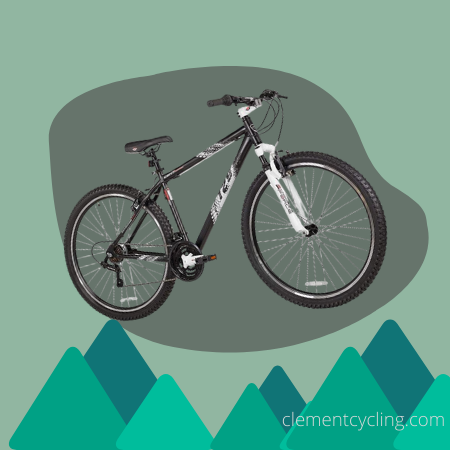
3. Vilano 26″ Mountain Bike Ridge 2.0 MTB 21 Speed Shimano With Disc Brakes
What’s more ideal than one of the best mountain bikes under $300? One of those which also doubles as your everyday bicycle. That’s exactly what this baby is.
Suitable for daily routes to work as well as blood-pumping ventures on weekends. You won’t get that value for this price anywhere else. The design speaks a lot about its double purpose, too.
It’s elegant and sophisticated, so you’ll be proud to ride it down the street as well as in the mountains. It’s an entry level bike, and that means anyone can give it a go.
Beginners will have an easy time adjusting to it and building up their skill, while amateurs and professionals will enjoy the simplicity as well as the features the bike offers.
One of such is definitely the wheels, which offer a supreme grip thanks to the alloy. What’s more, they’re very easy to maneuver.
Special Features Of Vilano 26″ Mountain Bike
Suspension fork.
Alloy Mag wheels.
21 speed.
Mechanical disc breaks.
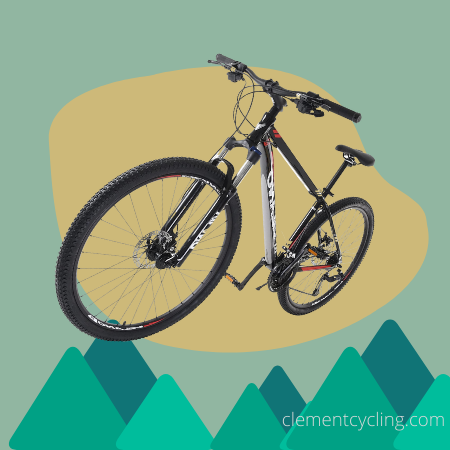
4. Mongoose Stasis Comp 26-Inch Full Suspension Mountain Bicycle
Anyone who lives in a hilly area and needs a smooth way to commute should check out this mountain bike. This is an ideal bike for any such commute and will get you from A to B safely. The simplicity of it allows people of any skill to try it.
One of the most important things a mountain bike for such purposes needs to have is high-quality breaks. Strong breaks are crucial for any terrain and are especially needed on hilly terrains.
This bike is also very lightweight despite the fact the frame is made of aluminum, which just makes it more comfortable.
The mountain bike can handle both road and off-road trails, and it has a sound grip on the ground beneath.
Of course, the discs help the breaks do their job properly and offer you a feeling a safety throughout the entire ride.
The company is famous for their high-quality bikes for professionals. This time they’ve come up with one of the best mountain bikes under 300 dollars for those riders who really like to kick things up a notch and try out some hardcore off-road trails.
The frame of the mountain bike is aluminum which is a great thing as this material is able to sustain more damage.
That quality will also make the mountain bike extremely durable. To ensure maximum safety, the bike has a dual rim brake system. That system allows you to have more control over your bike than the conventional systems.
Plus, it’s much safer and quicker. So it will increase your safety and your confidence. Another feature which will do the same is the already mentioned Shimano system which allows you to switch between speeds with ease.
Highlighted Features Of Kent T-29 Men’s Mountain Bike
The heated aluminum frame which makes it lightweight.
Anyone who needs a versatile bike which can handle anything from hard trails to asphalt should search no further. The Vilano blackjack is here. Thanks to its handcrafted frame, it will be one of the most lightweight mountain bikes you ever ride.
There are 8 speeds on the bike which is a sound variety, but what’s more impressive is the Shimano system which operates them.
As you already know, that makes the shifting more accurate and faster. Bumps are always better to be avoided, which is why the mountain bike has an excellent lockout system. The suspension allows you to cruise over bumps without feeling them.
And of course, let’s not forget the secure breaks. There are mechanical disks in both the front and back of the mountain bike, so you’ll be sure your breaks will react every time.
Another entry level bike which doesn’t pick who rides it. That’s simply because everyone benefits from it. The bike is a bit heavy, but that doesn’t really matter because it ensures its durability. After all, aluminum is a very durable and resilient material.
Even though the bike is in the lower price category, it doesn’t feel cheap or of low quality at all. The materials are actually rather durable, which in turn makes the bike resistant to damage and durable, too.
It’s a great mountain bike for everyday use and will make its rider feel happy and confident.
That being said, the bike was primarily made for off-trail cruise rides. This is the reason behind its weight. You can’t get a bike which can endure such trails without it being a little bit heavier than an ordinary bike.
Highlighted Features Kent Excalibur Men’s Mountain Bike
Handcrafted frame made from aluminum.
Alloy front shock.
Shimano TX 35D speed.
The front disc brake as well as a linear pull brake.
8. Takara Ryu Front Suspension Disc Brake Mountain Bike
What’s very common about mountain bikes of this caliber is that the manufacturers pack them full of features (some of which aren’t even necessary) and devote no time to the design.
Then you basically end up with a mush of features on an ugly bike. That’s not the case with the Takara Ryu, though. This is one of the most elegant bikes you’ll ever ride.
It’s not exactly one of those folding mountain bikes, but you definitely need to put it together. The set-up is easy and takes no more than half an hour. What you end up with is an amazing product which you can rely on despite the nature of the terrain.
That’s also possible because of the secure breaks the mountain bike has. It will keep you safe on rocky roads and cruise smoothly over bumps thanks to its suspension frame.
Who said that mountain bikes are a valid option only for adults? This bike is most suitable for children ages 12 or 13 due to its size. It’s also a sound investment as you’ll get a great mountain bike for your kid without having to pay a lot of money for it.
After all, they will grow it out at some point. It doesn’t mean adults can’t ride it, though. It’s perfect for anyone who’s shorter and lighter.
When you first get the bike, you won’t have to assemble it completely. All you’ll have to do is attach the handlebars, front wheel, and seat. It’s not a hard installation, but if you’re not really up for it, you can always take it to a shop.
Even though this isn’t a famous brand, the construction of the bike is solid, and it is very durable.
One of the most important things a mountain bike can do for you is lower the impact while you’re riding. That’s exactly what this one will do. You won’t feel any impact whatsoever. That’s what makes it such a smooth ride.
This mountain bike is lightweight, and rather small which means that it will fit anyone short.
It also makes it auditable for your child. This feature is also what makes the bike very easy to control and move around.
Don’t be fooled, though, the size in no way impacts the durability. How could it, when the frame is made of aluminum which is able to sustain a lot of damage?
Wind won’t stand in the way of its lightweight construction, either. This is actually a very fast mountain bike, partially due to the unbeatable Shimano system for gear shifting.
Before you buy your own mountain bike, there are some things you should know about them. Understanding these features will help you choose the perfect mountain bike for you.
It will also help you understand what you’re actually buying and if you’re getting the value for the money.
Types Of Mountain Bikes
First of all, you should be aware that there are multiple types of mountain bikes out there. The categories are based on your riding experience, capability, and most of all, budget.
1. Fat Mountain Bikes
These mountain bikes are called “fat” because of the wheels they have. Their wheels are between 3 and 5 inches in width. If you haven’t gone off trail riding before, then you should definitely opt for a bike like this.
They’re the safest option. The wheels are what makes them suitable for all sorts of terrains. In fact, you can even ride them on sand or snow!
2. Trail Mountain Bikes
These may just be the most common type of mountain bikes. They are great for trail riding and are therefore suitable for anyone. This is because trail riding doesn’t require a lot of skill.
They’re not really recommended for hardcore outings and rocky terrains but are still very fun to ride. They offer a comfortable and safe riding experience.
3. Cross Country Mountain Bikes
If you’re a competitive rider or want to become one, this is the type of mountain bike you should get. They’re lightweight and offer a lot of control to the rider. This is also why they’re very fast.
You’ll see that it’s a breeze going uphill with this kind of bike. The breaks on these bikes are, naturally, always really good, too.
4. All Bikes
This is a special type of mountain bike that is suitable for professionals. It’s designed for rocky terrain and mountainsides, being able to tackle the worst of terrains.
The performance features are the best thing about this type of mountain bike. The level of quality really needs to be upped so the rider can get an excellent riding experience.
Key Features Of Mountain Bikes
Now that you’re familiar with the types of mountain bikes out there, it’s time to find out just what kind of features there are.
Of course, you can’t expect all of these to be present in lower priced bikes, but the best mountain bikes under 200 will still have them. The key features to consider are:
The wheel size- the most common size of wheels for mountain bikes is 26 inches, 27,5 inches, and 29 inches. This is a very important feature to consider. That’s because the wheel size determines whether the bike moves easily on various types of terrain or now. The size you get depends on the kind of terrain you’re riding and on your daily plans and activities. You can be sure that the 26-inch wheel size is ideal, though.
Gears- Mountain bikes typically have up to 30 gears. Though, keep in mind that most of them are unnecessary for daily needs, so you don’t have to have a mountain bike with 30 gears. That is unless you have demanding habits and activities. If you’re just planning to ride your mountain bike on pathways and roads, fewer than 30 gears are more than okay. That being said, a range of gears is still something you want on your mountain bike. Low gears are what you need for uphill riding, for example.
Suspension- This is something that shouldn’t be overlooked when purchasing a mountain bike. It limits the bounces and the strikes you feel during your rides. In other words, it lowers the impact. That means that a mountain bike with suspension will offer a much more enjoyable riding experience as you will be more comfortable. You know your mountain bike is really high quality when it has the suspension in both the front and the back. That means it will absorb impact evenly and keep your whole body safe.
The most important feature of mountain bikes: Frame construction
A huge part of the key features, the frame construction makes or breaks your bike. That’s why it’s especially important for you to understand what it’s made of.
You should always look for the least heavy bike depending on your budget. That doesn’t mean sacrificing the material it’s made of, though.
There are two most common materials used for the construction of frames of mountain bikes. The best you can look for is aluminum. That’s because bikes made out of steel are way heavier. Steel is good for road mountain bikes.
That’s because the trail is flat and there won’t be a lot of bumps. If you want a proper mountain bike for off-road activities, though, definitely look for an aluminum frame construction.
These mountain bikes are lighter and offer more control to the rider. That’s especially important when you’re riding uphill.
Aluminum is also great because it can sustain more damage, and that keeps your bike durable for longer.
There are also construction frames made from carbon and titanium available. Carbon, for example, is extremely lightweight yet still very resilient. That’s why it provides a stellar riding experience.
Though, those mountain bikes are in a higher price range. You can be sure that the best mountain bikes under 300 have frames made out of aluminum.
How To Know Your Mountain Bike Fits Your Body
Not all mountain bikes are suitable for everyone. That’s why there are so many types of mountain bikes. People are different and have different body types and sizes.
That’s why you need to know what kind of mountain bike fits you the best before you make your purchase.
After all, you need to be comfortable so that you can ride your mountain bike.
A good fit means that your riding experience will be enjoyable and comfortable instead of painful. And that’s the overall goal.
Furthermore, if your ride is comfy, you’ll be able to build skill faster, and you’ll have a gratifying new hobby.
There are three different sizes of mountain bikes. Those are, of course, small, medium, and large. The one perfect for you is the one that isn’t too high or too low.
Don’t worry, though; most brands offer the option of modifying the peak of the bike, so it fits you better.
That being said, you should be more informed about different frame sizes. Similar to cars, every mountain bike will feel different and ride differently, even if the numbers are the same on paper.
The sizes on paper can also get very confusing. That’s because not everyone understands what the listed words represent in mountain bikes.
Basically, you need to look at the seat tube length and the top tube length. The seat tube length is what implied under “it shouldn’t be too high or too low.” That means that you need a decent standover while standing over it.
All you need to do is stand back as far as you can while you’re over the bike.
There needs to be at least an inch of room between the tube and space between your legs. Don’t worry if there isn’t at first, because you can always adjust the seat. Most, if not all, mountain bikes come with that feature. That will ensure you find your ideal height.
The other length to consider is the aforementioned top tube. It’s one of the things which dictates whether the bike will be comfortable or not, after all. The most important thing to remember about the top tube is that you aren’t actually supposed to look at it.
Instead, look at the horizontal line which stretches from the head tube to the middle of the seat post.
The easiest way to know which mountain bike fits you best is to look at what the manufacturer wrote.
The size charts are usually detailed, and you will be able to find your size. It’s made easier because the manufacturer usually recommends what kind of size a certain height needs.
You don’t need to be an expert to find your perfect size. Most manufacturers are aware people have problems with these aspects, so they make the whole process fairly easy. The most important thing to remember is your height.
The rest will come easy with additional instructions and size charts. Plus, you can always further adjust your mountain bike.
Mountain Biking Tips For Beginners
If you’re just starting out as a rider and aren’t sure what you’re actually supposed to do, here are some tips for you. Mountain biking is a fun hobby but can go awry if not done properly. That’s why it’s important to start the proper way.
Find The Perfect Position
The first thing you need to do is assume a neutral position. The thing you first need to pay attention to is your feet. You need to make sure the pressure is equal. That means that you can stand on your heels or on your toes.
It won’t bring you any balance, and it will make it uncomfortable and hard to control the bike. There’s a cool way to practice your neutral position and to make sure you’ve done it correctly.
All you need to do is stand tall off the saddle with your elbows locked. Make sure your knees are locked as well. Lower your hips straight down by slightly bending your knees and elbows.
This is a crucial step to master as it will determine your future habits of mountain bike riding. What’s more, all the complicated tricks and jumps start from this pose.
Tweak The Stance
The stance is the most important thing about mountain biking. Even though there’s a formula for it (which was described above) which never fails, it doesn’t mean that you can adjust it a little.
Every person is different, and the whole point of the position is for you to be comfortable. What’s more, tweaking your stance also refers to the way you adjust your body to the terrain beneath you. You can’t be stiff and in just one position while you’re riding.
You need to relax your body and move with your mountain bike. For instance, when riding uphill, shift your weight forward. And when you’re going downhill, lean back a little. That’s what’s going to keep you from falling and what’s going to make your ride more comfortable.
It’s tricky leaning back when you’re going downhill though. You need to make sure that you don’t lean too much because it’s easy to lose control of your bike.
Don’t Look Down
This seems very obvious, but most beginners forget this little tip. It’s very easy to lose your focus if you look at what your feet are doing. You need to concentrate on the road ahead of you and trust your instincts when it comes to footwork.
If you keep looking down, you’ll lose your balance very easily, and you’ll fall. So the safest way to avoid injury is definitely to keep your eyes on the road.
Not looking down also implies not looking at the ground directly in front of your bike. It will be easier to avoid whatever is in front of you if you keep your gaze straight ahead. Finally, looking ahead will help you slow down.
You can’t just hit the brakes; you need to do it gradually. And knowing your terrain will make that easier for you.
Make Necessary Adjustments
Although this has already been talked about, it cannot be emphasized enough. Make sure that your bike is the right size! But once you’ve picked out the ideal mountain bike for you, don’t hesitate to make certain adjustments to it.
Just because you set it a certain way doesn’t mean you need to have it like that all the time.
After all, it will surely need adjustments after some time. Every time before you go out mountain biking, you should make sure that your bike still fits you almost ideally. What’s more, check your suspension and tire pressure as well.
They need to be adjusted for your size too.
Finally, it’s not a bad idea to read up on bike maintenance. That way you’ll be able to make the necessary adjustment on the road. It will give you a sense of security in case your ride doesn’t go that smoothly.
The Gear You’ll Need
Obviously, mountain biking is a dangerous sport that requires some equipment. You can’t just go mountain biking in your everyday clothes. You need to be prepared.
So if you’re a beginner, it’s useful to know what kind of gear you need before you start mountain biking. And if you’re an advanced rider, then you can just make sure that you’ve got everything you need.
The point stays the same no matter what kind of rider you are: gear is important. So here is some basic equipment you should have before your next mountain bike outing.
A Helmet
This is the first and foremost piece of equipment you need while mountain biking. No matter how good you think you are, you can still fall. And at those high speeds and that rocky terrain, the falls can cause some serious injuries. That’s why you need a really good helmet. Otherwise, you risk serious head injury.
That’s one of the most sensitive parts of the body, so it’s important to take care of it. You should make sure your helmet is tough and that it can handle mountain biking. Luckily, there are helmets designed especially for this sport. There’s plenty to choose from.
Riding Gloves
Even though this seems like an unnecessary waste of money to some people, it’s actually quite important. Riding gloves keep your hands safe and comfortable. In an occurrence of a fall, your hands will be protected. But riding gloves are important for more than just that reason.
They also offer a harder and more secure grip on the handles. That gives you more control over your bike. Not to mention that they protect you from outside weather. You won’t feel the wind of the sun on your hands, and you’ll be able to enjoy your ride longer.
Protective Glasses
These are a very sound investment next to your helmet. It’s inevitable that particles of dirt and dust will fly into your face while you’re mountain biking. It’s very important to protect your eyes.
They are also rather sensitive. A good pair of protective glasses with clear lenses isn’t hard to find.
Verdict Of Best Mountain Bikes Under 300
Now that you’ve reached the end of the article, you’re more equipped to find a suitable mountain bike for you. This is because you now understand their features and what you’re getting for the price you’re paying.
Way to go! A final question is still to be answered, out of all the best mountain bikes under 300, which one is the absolute best? The number one on the list isn’t number 1 without any reason! It’s the perfect bike for anyone.
With the sound aluminum construction and the full suspension, this is the bike you want when you’re just starting out. Though, it’s suitable even if you’re experienced and would just like to refine your riding skills.
Whichever bike you choose, remember that each one has its unique purpose. Think about it thoroughly, and choose the one that fits your needs best (and in most cases, that’s the first bike due to its universality).
Whether you’re buying your first car, or your tenth, you should know the importance of regular car servicing and why skipping out on that annual or bi-annual service isn’t a good idea.
When it comes to keeping our car’s in tip-top shape and working efficiently and safely, there’s not too much that’s more important than a service. With experts from your dealership working on your car, or certified mechanics, you can rest assured you’re keeping on top of any issues down the line.
That in mind, we’ve listed a few of the most important factors to do with regular car servicing and why you should always move forward with your scheduled vehicle servicing.
You’re Keeping On Top of Oil Changes
Source: connect2local.com
For our readers who aren’t too in the ‘know’ about cars, you’ll want to make sure that you have someone routinely checking your vehicle’s oil level.
To keep things simple, your car’s oil is essentially the ‘blood’ of the vehicle and it is what keeps the engine and all subsequent components operating effectively and without rubbing, etc.
If your oil is low, dirty or someone has put the wrong oil in the vehicle, you’ll be dealing with a myriad of issues that could eventually lead you to replacing your car’s whole engine — a costly and cumbersome task.
You Keep Tyre Pressure Safe
A second key point that comes from regular servicing is keeping on top of your tyre pressure.
There’s a good chance you’re not too sure about your tyre pressure unless it comes up on your dashboard, and it’s hard to know when to put a little more air into your tyres from time to time — if you know how to do this at all.
That in mind, without a service your tyres could slowly deflate and cause issues with uneven wearing, sluggish responsiveness and more.
Heading down to your local mechanic or finding a reputable mechanic through Enji AU for a regular service will have your tyres inflated to the correct level and they’ll also have a look for things such as nails and other damage to tyres.
You Keep Radiator and Coolant Fluids Topped Up
Source: natrad.com.au
As you may already know, your radiator and coolant are two key parts of your car that keep the machine running optimally and give your vehicle the chance to cool down during a drive during the day as suggested by natrad.com.au.
With these fluids low, or entirely run out, you’re running the risk over majorly over heating your car and even burning out the engine and leaving you with a major repair bill down the line.
Again, consistent servicing will ensure you’re keeping on top of your coolant levels and having your car’s radiator fluid topped up. This will ensure you’re keeping your car operating effectively and reducing issues like high fuel burn.
You’re Doing Everything by the Book
We know it can be difficult to hand off your car to a mechanic for a service, which costs a little money, though it’s far better than doing it on your own.
When we hand over our vehicles for regular car servicing, we’re getting the assurance that everything’s done by the book and being correctly checked off. This means that your car is going to be serviced in a way that covers all of the nuances associated with that model — something at-home servicing often forgets.
In line with this, your manual will outline some rather complicated servicing steps that you might not understand, and so handing this task over to the professionals during a regular service is a good idea.
The Takeaway
Source: eliancars.com
Those points in mind, it’s quite clear to see that regular servicing is vitally important for your car’s longevity and will mean that you’re preventing issues before they become costly or even leave you out in the cold without a car.
You’ll want to make sure to keep an eye on everything listed below:
All of these things should be dealt with, and there’s no easier way to do this than heading down to a mechanic or your vehicle’s dealership for a service.
To end, the most important thing to keep in mind that regular car servicing ensures your vehicle’s safety and prevents the risk of accidents. For example, uneven tyre pressure and uneven rubbing can reduce your vehicles chance of breaking quickly when the road conditions are unideal.
That in mind, always be sure to book in your routine servicing.
A motorcycle—or any other vehicle for that matter—can also be a collection piece, besides it being your trusty old friend on the open road. But, these machines don’t last forever, and when rust begins to spread like coronavirus, there’s nothing much you can do about it except to face the awful reality of sending your bike off to retirement.
The good news is, despite having an expiration date, you can actually extend the life of your vehicle. Though rust can cause heart-wrenching damage or expensive restorations, there is a way for you to prevent, reduce, and remove corrosion in your motorcycle.
Discover more about proper maintenance and storage of your motorcycle and other vehicles here to keep your wheels turning heads while you rev on the road.
1. What Causes Rust
Source: unsplash.com
Rust is a chemical reaction that occurs when metal is exposed to oxygen and moisture. When left unattended, rust can spread on surrounding surfaces and weaken the integrity of the metal.
Motorcycle parts and those of other vehicles are mostly made up of metals. The engine, fuel tank, gearbox, disc brakes, suspension, and other components are metals that can corrode over time. Whenever these parts are exposed to water, rain, snow, moisture, and humidity, rust can begin to form. Besides hydrogen components, outdoor components like road salts, grease, and other noxious elements found on the road may also cause corrosion in any vehicle.
When left untreated, decaying metals can eventually lead to permanent damage on your motorbike or other vehicle.
2. Fixing Rust Problems
Source: pinterest.com
But, don’t lose hope. Rusting in vehicles is normal as it is with metals.
In fixing corrosion issues in your motor vehicle, remember these three Rs:
Restrain
The adage “prevention is better than cure” holds true in keeping your motorcycle in tip-top shape. Prevent corrosion from forming by properly maintaining your vehicle.
Make sure to clean your bike thoroughly once or twice a week when you’re using it regularly in the summer. If you decide to take your bike for a spin during the winter, make sure to wash it right away to get rid of elements that can cause corrosion.
After washing, apply wax and anti-rust protection. Doing this routine religiously may seem taxing, but you’ll thank yourself later once you realize you’ve prolonged the life of your bike.
Reduce
Rust may still be inevitable in spite of performing rigorous preventive measures to slow down corrosion.
But, the good news is, you can control the early stages of corrosion by using rust converters. Rust converters are chemical primers you can apply directly on a metal surface to convert rust into a protective chemical barrier.
Using rust converter products on the onset of corrosion may help inhibit those deadly rust patches from spreading.
Looking for rust converters that work? Sites like 4wdlife.com have reviews on the best rust converters available in the market right now.
Remove
If rust patches begin to spread on a larger scale, there’s a DIY home remedy you can do as a last resort before visiting the mechanic.
To remove rust, you’ll need an abrasive material such as steel wool or sandpaper.
Here’s a quick four-step guide:
Wash the rusted area with motorcycle shampoo, rinse with water, and then dry with a rag.
Using the steel wool, gently rub the affected area to avoid scratching any painted surface. When you start to see the rust coming off, switch to the less abrasive sandpaper to finish the job.
Apply chrome polish to mask over any minor scratches.
Wax the surface where you removed the rust to protect it from elements that can cause corrosion.
3. Storage
Source: pinterest.com
Whether you bought your road beast bone stock or built it yourself, there’s no question that you may have invested a pretty penny in owning a motorcycle. That said, upkeep should also be on top of mind so you can keep your bike pretty and running smoothly.
Storage is one of the most critical motorcycle maintenance solutions to prevent rust. You must invest in suitable storage to house your bike.
In terms of longevity, nothing can beat the security of an indoor storage. Keeping your bike and other vehicles indoors when not in use protects them from rust-forming outdoor elements and extreme weather conditions.
Storing your bike or other vehicles in the garage should be enough. However, if there isn’t enough space, why not do a garage sweep to make space?
If cleaning out the garage sounds like too much work, you may consider renting out a motorbike storage facility. Or if you want your babies close by, it may be a great investment to build a shed on your backyard. There, you can line all your bikes and other vehicles up and appreciate their beauty.
If you’re keeping your bike outside, make sure to put on a bike cover to help keep moisture out and protect the metals’ integrity.
4. Preparing For Storage
Source: tru-tension.com
Besides indoor storage, the way you prepare your vehicle for hibernation is also crucial in maintaining its performance and appearance.
Here’s another quick four-step guide on how to keep your bike ready for storage:
Perform a deep clean on your motorcycle. Each time you go for a ride, your bike accumulates dirt, grease, and grimes on certain parts. When these noxious elements build up, they can eventually form rust and cause damage. Thoroughly clean all the nooks and crannies to keep your bike spotless and rust-free.
After rinsing and drying, apply motorcycle wax on painted surfaces. Waxing helps repel moisture that may seep into perforations. It can also make your bike looking brand-new for your next open road adventure.
Coat all metal surfaces with anti-corrosion products, except for the disc brakes. This can help minimize rust from forming and save you money in the long run.
Don’t forget to fill up the tank, especially before long periods of storage. Leaving the fuel tank empty for months without using the bike can cause rusting from within. Make sure you fill up and use a fuel stabilizer to keep the fuel fresh for several months.
Takeaway
Owning and using a bike or other vehicles to travel places undoubtedly adds a cool factor to your personality. But, an improperly cared for vehicle is never sexy. To keep your vehicle looking fresh, running smoothly, and cost-efficient, follow these rust-reducing tips.
Motorcycle riding is the most efficient way of traveling, and at the same time, you can also enjoy the scenery. However, to drive your motorcycle on the roads of Ontario, you will need an M license. To get a full Ontario motorbike M license, you will first need to pass a written test [M1] and a road test [M2].
M1- This license is essential to take the Ontario Motorcycle Course. It is a written test. It has a validity of 90 days.
M2- You can upgrade to an M2 license [1st road test] after passing M1 written test. It allows you to ride on any road with passengers in the night.
M- After passing the M2 test you will need to take a 2nd road test after 22 months of getting an M2 license. M license holders are approved to ride in the province. This license will decrease your motorcycle insurance premium.
The first step towards getting your M license is to take the M1 knowledge test. Nevertheless, the tests are conducted at the local driving test center. For more information on how to prepare for the M1 test click here.
Source: northernontario.travel
Passing the M1 test is easy as well as challenging. You need to read and reread the motorcycle handbook. It contains helpful and relevant information needed to pass your license test. Besides, the handbook study, you will need to take online practice tests. These mock tests simulate the real test, so you get to know what to expect.
The practice tests also help to create a fluency of the traffic signs and road rules. The only thing matters are that you must take the M1 practice test sincerely and clear the official exam at the first attempt.
If you fail at the first attempt, there will be a waiting period of 7 days before you reapply for the M1 test. You only get three opportunities to retake the M1 test, so it is essential to get serious about studying for the M1 knowledge test.
If you want to clear your M1 test Ontario, then it is important that you use the M1 Practice Test Resources. This will enable you to take the test with confidence, and you can pass it on your very first attempt.
Why practice questions that are essential for M1 test prep?
Source: pexels.com
The following are few reasons to practice questions for effective preparation of the M1 test.
1. Helps build confidence
M1 practice test questions are very similar to actual test papers, hence it can build confidence.
2. Practice makes perfect
Exposing to similar types of questions and answering repeatedly will enable you to grasp the subject.3.
3. Cost-saving
If you manage to clear the test on the very first attempt then you need not pay again for appearing the test and save the fee.
4. Increases chances of success
Practicing, again and again, will let you know your weak areas and you can address them and remain less nervous during the test.
5. Useful insights
By taking these tests seriously, you can tackle the tricky questions easily and can get proper insights into the details.
6. More Relevant
Instead of reading the official handbook, better to try a practice test paper, as it will touch upon the relevant portion of the test paper, instead of reading A to Z of the whole course.
How to prepare for the M1 written test?
Source: pexels.com
With appropriate basic knowledge about the Canadian Traffic Law, road signs, and how to respond, the candidate is deemed to be prepared for driving safely on road.
To do this, study the motorcycle handbook. You can make flashcards, take notes, and underline crucial points for reference. It will help you prep up for the test. Remember, every question has four answer choices among which just a single one is correct. There are 40 multiple-answer questions and you must get a minimum of 32 answers correct. With lots of mock tests, you can certainly pass and get your M1 learners permit.
After you get the M1 learners permit, you can start practicing motorcycle riding on the road, but there are some conditions that you need to follow.
Ride only during daylight.
BAC has to be zero.
Never enter the 400-series highways.
No passengers are allowed.
M1 is a learner license but only ride the motorcycle when you have proper insurance. Practice for 90 days and then enter the M2 road test to upgrade your license.
Most motorcyclists love to customize their bikes, so that they can enjoy a unique look. However, if you are interested in making any changes to your motorcycle, then you must keep in mind that its safety procedures are not compromised. The following are a few safety features that you must follow while riding a motorcycle.
1. Helmets
Source: unsplash.com
Nowadays, in every state, the law regarding the use of motorcycle helmets is very consistent. Not only a driver, but even a passenger must also wear a crash helmet.
Helmets should always be worn while riding the motorcycle. Riders are free to customize their helmets and add speakers or earphones. However, they should strictly be used for only communication and not for listening to music.
2. Handlebars
One must always maintain handlebars and they should not be damaged or loose, as this can impede motorcycle safety. A handlebar must not exceed the 380mm height above the driver’s seat.
3. Mufflers
Your motorcycle must always be equipped with a working muffler. However, a few motorcyclists may upgrade to a muffler that may often create more noise than the original one.
Although no rule is in place about its loudness, the officer may pull you over as per his or her discretion if it is producing unreasonable noise, and you may get a ticket.
4. License plate
Your license plate must be visible from 180° from the rear. Often many people enjoy having the license plate on the motorcycle’s side where it is not visible. This may go against the Traffic Act of Ontario.
Riding a motorbike is fun, but only safe if you are wearing safety gears. Often people debate about the use of helmets, but it is an undeniable fact they have and can save lives. However, they have got a very long history and it was not that safe as it is today.
The present-day motorcycle helmets have undergone many different changes due to advanced technology. Helmets that you get today are quite safe for motorcycle riders. Furthermore, helmet laws also have evolved because more research has been done on it, and this safety gear has merged as the most import support for the riders. You can also check it online.
The invention of a crash helmet
Source: history.info
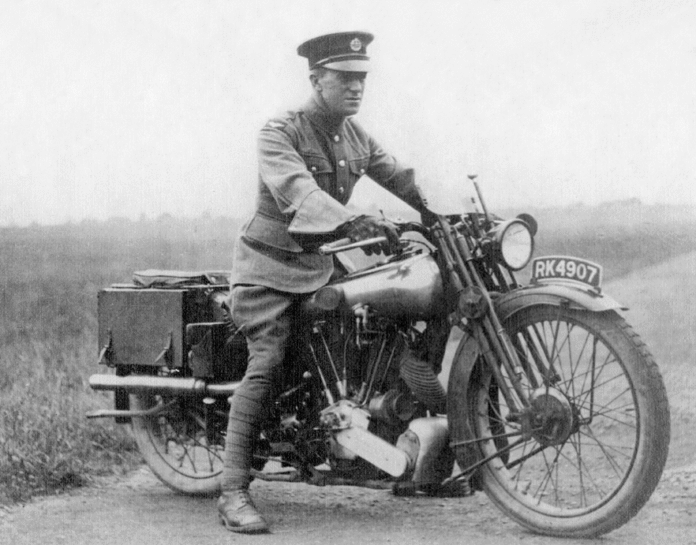
It all started with highly decorated British army person called T.E. Lawrence who participated in the first world war, died at the age of 46 due to a motorcycle crash in 1935. A film was created about his military career based on his own writing. This had made him famous, but even being a legendry military person, he could not survive a motorcycle crash.
This British Officer was popular as the ‘Lawrence of Arabia’. He was a national hero, who died in a motorcycle crash that accentuated the risk of bike riding without proper gear.
His death was mourned by many, and that also includes a neurosurgeon called Dr. Hugh Cairns. The doctor was deeply affected by the death of Lawrence. So, he started researching the reasons for the death due to motorcycle accidents.
It was discovered that brain lesions of the accidents were due to not wearing a protective helmet. The repercussion of this case study was that helmets became mandatory in 1941 for British Army’s motorbike riders. It can be said that the first official law for protecting motorcyclists’ heads became mandatory during the II World War.
The evolution and revolution from pudding bowl to hi-tech helmets
Source: amazon.com
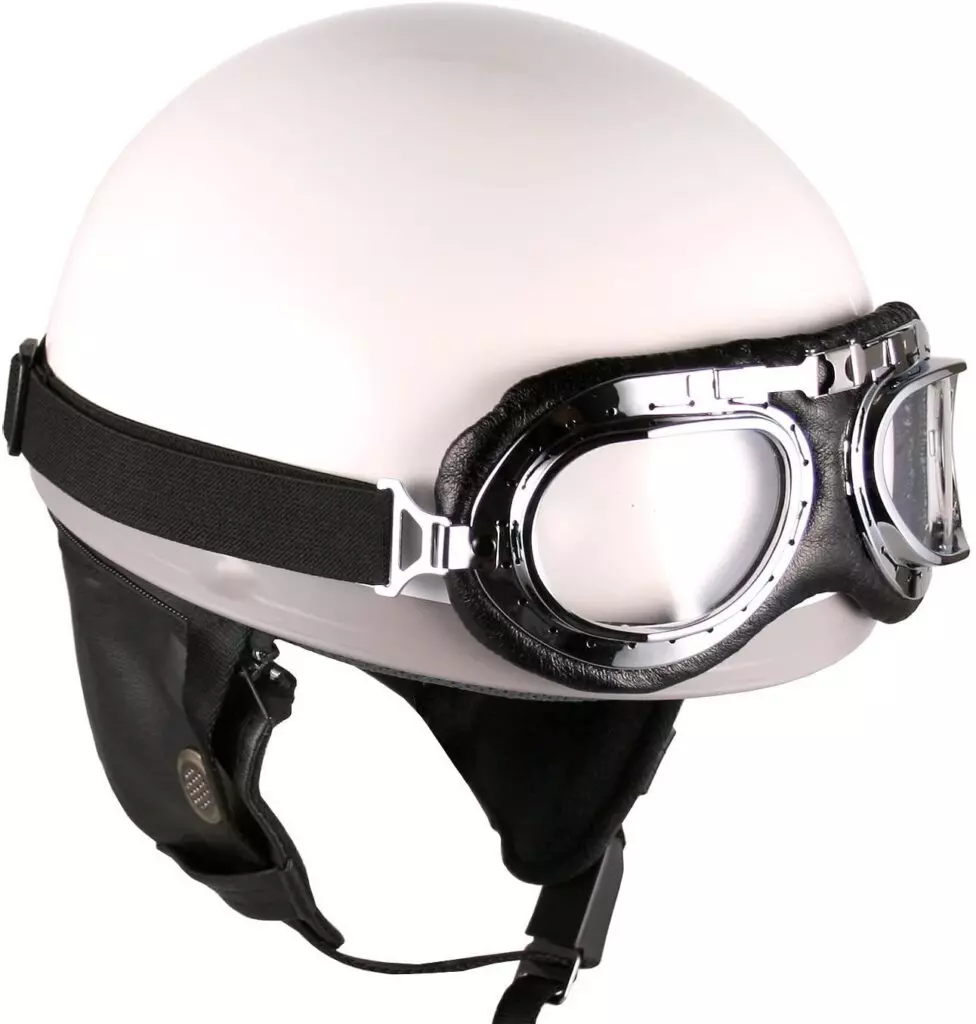
In 1953, motorbikes speed led to an increase in crashes and subsequent deaths. In such situations, Professor C.F. Lombard from the University of Southern California created the first shock-absorbing motorbike helmet.
It was the first patented modern motorcycle helmet designed for riding at high speed. The exterior was a tough shell, whereas the inner had a couple of padding layers. The internal layer easily absorbed and dispersed the shock impact. However, those helmet models were not much effective.
Around the same time, Bell Autoparts owner Bell Richter witnessed serious injuries to his racing team. In 1954, he set a helmet division in his wooden garage and created the Bell 500 helmet. In 1957, Bell 500 TX an upgraded version goes into production. It is an iconic ‘jet style’ headgear that revolutionized the helmet sector.
The primary helmet designs were further improved by using different materials that were lighter, and more layers were put to increase its strength and durability. Furthermore, as technology advanced, computer testing made it simpler for manufacturers to test their quality and effectiveness.
In 1967, Bell strikes again developed ‘The Bell Star’, the first full-face helmet. It transformed the helmet’s future forever. Evel Knievel, a stunt drier wore and popularized it. Peter Fonda also wore it in the ‘Easy Rider’, and thus now helmets have become a fashion accessory.
Source: rogerebert.com
Helmet materials and designs haven’t changed much since Bell Star introduced full-face gear. Today, helmet wearing is more about style than construction and safety. In the 1970s metal flake helmets were cool, but the trend becomes a little warm in the 80s, where the tendency starts to follow fashion hints from track heroes. Signature models like Kenny Roberts AGV became popular.
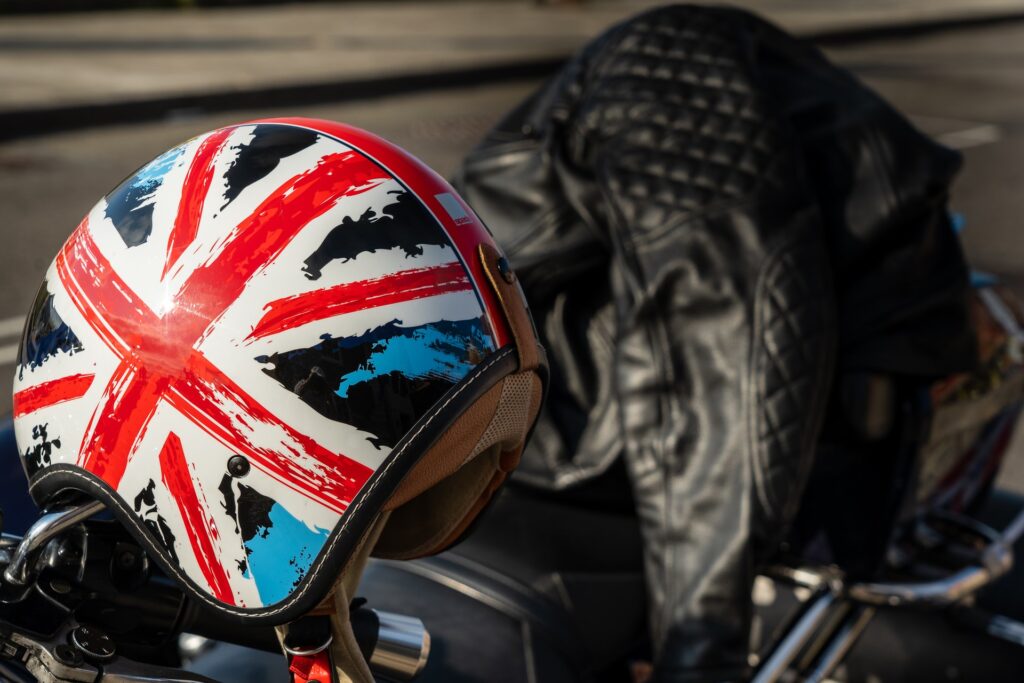
The last decade witnessed a drift in the past, the vintage helmets. The new biker tribes made the jet style reappear on the scene and British firms started producing attractive replicas of these original icons.
Motorcycling has become a practical commuter alternative, so the demand for stylish and practical helmets has also increased. ‘The Modular’ is available in an open and full-face style. These helmets are a blend of practicality, comfort, durability, and safety for modern bike riders.
The advanced HUD or head-up display is the newest thing, which has transformed the motorbike helmet into a video game or sci-fi movie. These hi-tech lids are focused on HUD software innovations and screen design. It is a unique and different approach that you need to watch out for. It can revolutionize the modest skid lid.
Now with present-day technology and with superior materials production, the latest available helmets have become very effective and also important while saving lives that almost all states have made it mandatory to use while riding a motorcycle.
The history of helmet laws
Source: unsplash.com
During the early sixties, as research started emerging about the enhanced safety and effectiveness of helmet usage, the US government took major steps to lower the number of deaths occurred due to motorcycle ride.
In the year 1966, the Highway Safety Act was cleared. Based on this act, all states had to mandate helmet use if they wanted to get federal funding for their highways. During the same year, the American National Safety Standard for Motorcycle Helmets was formed, which is an organization that created proper standards for manufacturing helmets.
In the year 1968, officially the great helmet debate started when Michigan first time repealed its helmet law. Due to this a domino effect started that led to many states lobbying congress for stopping financially penalizing those states having no helmet laws during 1976.
Even today, the helmet laws are controversial, but only 3 states have got no laws for using helmets while riding, and these states are – Iowa, Illinois, and New Hampshire.
Today’s motorcycle helmet’s safety
Source: pexels.com
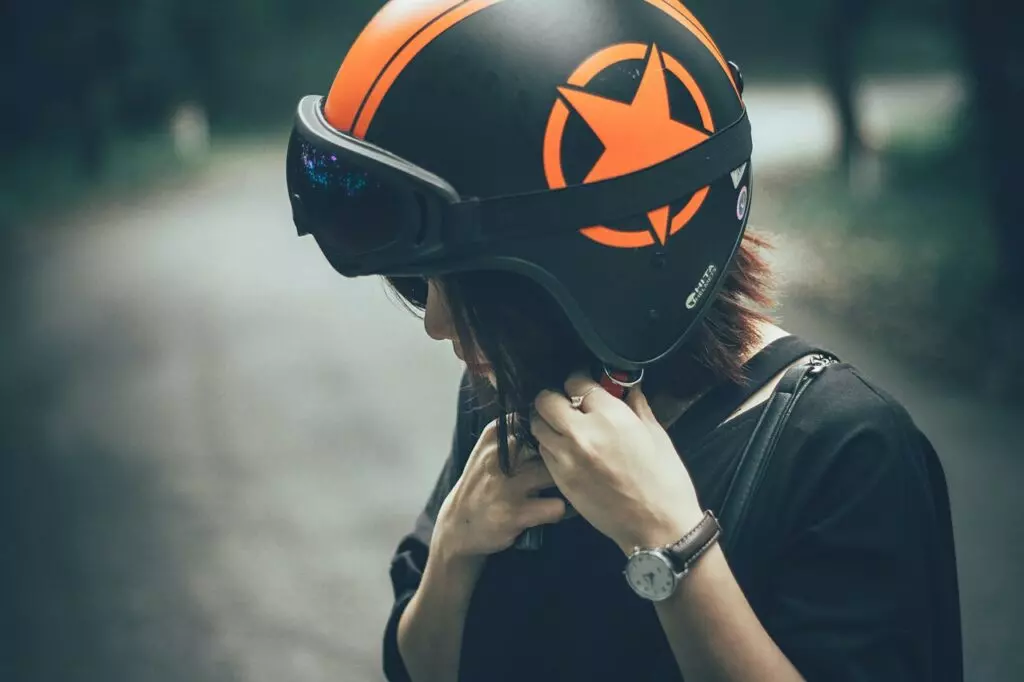
The motorcycle helmets are developed in state-of-art facilities. Safety is not the most essential factor, even comfort is. Currently, the helmets are designed from Kevlar composites and carbon fibers.
The materials are lightweight yet can manage high impact resistance. Every motorcycle helmet needs to pass various homologations like DOT standard in the US and ECE 22.05 in Europe. The certification reveals that the helmets are tested thoroughly for strength and have passed.
In 2019, a law got passed that professional riders need to wear helmets with FIM homologation from International Motorcycling Federation. There is constant study and development of motorcycle helmets so that bikers ride much safer.
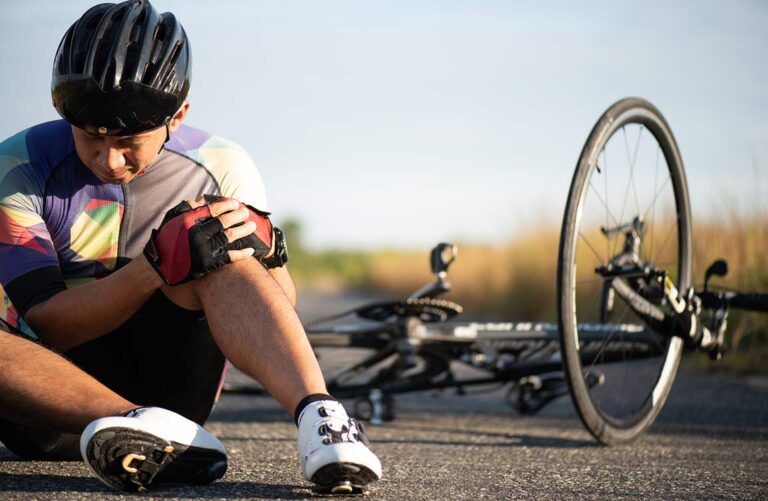
When you are biking on the road, there will be mistakes, and these mistakes may lead to injuries. A vital component of your training plan is recovering from these injuries. If you do not take adequate steps to recover from an injury, you may curtail your participation in the upcoming races or end up with a more significant injury. So, here, we have come up with a set of tips and tricks that can help you recover better from an injury from a bike.
1. Take it easy with the Vitamin I
Source: pexels.com
For most people, the typical response to pain as ibuprofen. Well, it does help deal with swelling, but does it actually heal you? Ibuprofen works well to kill the pain by subduing the inflammation during the initial few days of the injury, but it does not heal you, comments Rosy, an enthusiast cyclist who offers assignment help Melbourne services. Well, we agree with Rosy on this. What ibuprofen does is that, it delays the injury by not giving you an exact assessment of the injury’s extent.
When you consume anti-inflammatories, they impede prostaglandin enzymes. As a result of this, the blood circulation to the affected area is improved. This leads to heightened tissue permeability. The repair-crew cells in the body are stimulated and help overcome the pain. Following the initial two days after the injury, you should use Tylenol. It is a pain reliever. This means that you won’t delay the healing process, rather target it. After that, you can continue with your anti-inflammatories.
2. Get adequate sleep
Following a straining workout, bike crash, or any sickness, you need time to heal. Once you undergo a severe injury, your body needs time to recover from it and regain the lost strength. During this time, you may also have to deal with a lot of stress. So, while you are healing, get adequate sleep. In the first few days after the injury, you should sleep on old sheets. See, the thing with new sheets is they tend to stick to your skin, and when you have fresh injuries, anything that brushes against your skin hurts. More so, your quality of sleep will be affected by all the pain this injury may cause. So, get to bed early. It will help you make up for the poor sleep quality.
3. Hire a physiotherapist
Source: victoriasportsphysiotherapy.com
If you wish to speed up the recovery process, or if when you return back to the track, you feel a certain pain or discomfort, it is worth hiring a physiotherapist. The job of the physiotherapist is to relieve you from all the pain trapped in your muscles. A good physiotherapist will prescribe you some exercises, which can boost your healing and prevent future injuries, comments Tom, who offers java homework help and is a serial cyclist.
For instance, the pain in the back or the shoulder is usually caused by the dearth of flexibility in your mid-back or the imperfect pelvis and spinal alignment. A trained physiotherapist will give you all the correct exercises to better your alignment and flexibility.
4. Move it
Of course, the first few days after the injury will be challenging and uncomfortable. During this time, proper rest is essential, but resting does not mean that you completely immobilize yourself. Yes, you have to be easy with your injured limb, but beyond that, you should keep your body in motion. It will ensure that the blood flow in the body is good. This can stimulate fitness and accelerate the healing process. To accelerate the healing process, you can try out activities, such as rowing, resistance training, and swimming.
5. Stay hydrated
Source: pexels.com
This applies during the race, after the race, or during an injury. In general, you should always be well-hydrated. The problem is in people who do not care for their hydration; the healing process takes a long time. If you cannot drink a lot of water daily, try to add fluids to your diet, such as milk or protein drinks. These can be excellent recovery beverages. However, in general, regular water or water infused with electrolyte can also be a good pick. Yes, you can consume sports drinks, too, but they are good only in moderation. So, keep a check on that.
6. Try compression socks or clothing
There is a divided opinion on this, but there are still a number of studies, which have presented that compression clothing does speed up the recovery process. So, invest in a good pair of compression socks or tights to speed up the recovery process.
7. Get the right diet
If following an injury, you are forced to take a mini-hiatus or keep you away from your gym or training; you may consider lowering your calorie intake, keeping in view your low physical activity. However, that is not the correct thing to do. When you are injured, your body needs extra energy and nutrition to rebuild the muscles. So, following a crash, you should never decide on cutting back the calories. On the other hand, for people who are still pushing themselves to be active following an injury, we recommend you to eat extra. It is because your body is using the extra calories to heal. As a general rule of thumb, anytime you suffer an injury, add an extra protein serving to your diet for the first seven days post the injury. Proteins build and repair our muscles. So, do not overlook it.
If you are anything similar to us, you are continually on the lookout for some cycling hacks, which can accelerate the fixing, cleaning, and maintenance of the cycle. Why? Because this would mean that you have a higher time actually riding the bike. If you browse through the internet looking for bike hacks, you can find an overwhelming variety of them. However, the problem is a lot many a time; they involve steady hands, a Dremel tool, and more confidence than we actually possess.
So, for you, we have the ten best hacks that will come in handy regardless of your physical strength. Let us get started and take a look at these hacks one by one.
1. Wherever you go biking, carry with you a 20 USD bill
Source: pexels.com
Well, 20 USD is enough to fetch you a good wholesome meal and simultaneously walk you out of the worst of the challenges. More so, it can also be the ideal boot if ever you puncture your tire.
2. Get a handlebar bag
Wish to access the tools and snacks but do not feel like wearing a jersey? Mathew, an online chemistry tutor, suggests getting a handlebar bag. In this manner, you can write your bike in your T-shirt, and have a great day out in the sun.
3. Freeze that water
Many of us like to drink cold water in winter because it is all sweaty and cold outside. So, why not just take half a bottle, and freeze it. Then on the remaining space, you can add regular room-temperature water. If you like, you can even add a drink mix for a refreshing jolt of energy amidst a long bike ride.
4. Clean the skewer
Source: trekbikes.com
If ever your bike creaks, a prominent culprit is the thru-axle or the skewer. So, what should you do? Get it out, and clean it thoroughly. Next, you will have to grease it well and place it back in, and you can enjoy your bike ride in true silence.
5. Wear a plastic bag over your socks
When the roads outside are wet, it can be quite a task to keep your feet dry. Consequently, you may end up spending a lot of money on the overshoes. Alternatively, you may also invest in some cheap plastic bags, and they will do the trick for you. How? Just wrap them around your socks, and then you can put on your shoes over them. Some cyclists find this even more or just as effective as the overshoes. Honestly, it does not look strange at all. However, the only problem is during the winters; your feet might feel a bit sweaty as there is not enough pathway for the heat to escape.
6. Surgical gloves
Similar to the plastic bag, the surgical gloves also perform the same role. They will have a protective layer between the elements and the body. More so, these gloves are pretty cheap, and you can easily wear them underneath the cycling gloves for an added protection. More so, since the heat will be trapped, your hands might feel a bit sweaty.
7. Foot and hand warmers
Source: unsplash.com
If you go on longer bike rides, you may suffer from poor blood circulation. This is when the heat pads will come in handy. You can use the heat pads for both your hands and feet and they are indeed one of the best ways to stimulate blood circulation during the cold winters. The good thing about the foot and hand warmers is they are cheap. So, you can place the smaller pads inside your gloves or maybe into your overshoe or the shoes. This will release the heat steadily over the course of the next couple of hours.
8. Powdered laundry detergent
Once you are done lubing or cleaning the bike, your hands will be as black as the lungs of a pro-coal miner. Do you know what can make it worse? Everything that you touch will feel greasy and will have black fingerprints on. More so, regardless of how much you try to scrub it off, there may be a few remnants of drivetrain gunk under your nails and hands. How do you get rid of it?
The perfect solution to this problem is the powdered laundry detergent. So, before walking to the sink after cleaning, take some powdered laundry detergent. Trust us when we say this, washing your hands with it will leave your hands super clean. However, the problem with laundry detergent is that it can be very hard on the skin. So, it can be even drier for someone who lives in a cold and dry climate. So, it would be best if you strictly moisturized your hands generously after you clean your hands.
9. Water Bottle Wiper
If you happen to ride the bike over debris or glass, never try to wipe the tire using your hand. Get down, and use your water bottle. It will lower your chances of cutting your fingers or hands or dragging the fingers into the rear brake.
10. Cleaning the bike
Source: unsplash.com
A lot of people believe that they must employ dedicated cleaning products for washing the bike, but that is not true. You can alternatively use the inexpensive washing liquid, and it will do the trick. Of course, there will be people who may say that the washing up liquid has certain salt content in it, and that can harm your bike. But that is not true. You will be washing it much before it does any damage.
So, these are a few of the biking hacks that you need to know if you are a serial cyclist. If you have more to add to the list, let us know in the comment box below.
A motorcycle accident can leave you in distress as it can be messy and frustrating. Depending on who was at fault and what the damage inflicted, it can go very different ways. Let’s say you’re the victim of the accident. Are you going to pursue a personal injury or property damage? What if you’re the motorcycle driver, and it’s not your fault? If you sustained injuries and are innocent, you can file for compensation, and these are the following things you need to know:
Personal Injury Or Property Damage
Source: smartguy.com
There are two types of claims:
Personal Injury
According to Harrell and Harrell, if the motorcycle accident resulted in bodily harm or related losses, you could seek a personal injury claim from the insurance company of the motorcycle operator or of the other driver responsible for your injury. If you’re the driver and the accident happened at your fault, you can claim from your own insurance company as long as you have enough coverage.
If the unfortunate event is new to you, you may seek professional assistance to help you navigate the law. An attorney, such as Alvine Weidenaar, will help protect your rights and ensure that you get the best representation you need. A list of useful resources for personal injury plaintiffs can also be found on CompareLawsuitLoans.com.
Property Damage
This claim covers the damages sustained to your motorcycle. If you purchased collision insurance, you could file a claim to your own company. Otherwise, you’ll need to seek compensation against the insurance company of the one at fault. Don’t hesitate to file a claim at your own provider as your rate won’t increase unless the accident is your fault.
Prepare Your Evidence
Source: unsplash.com
First, ensure that you’re well enough to move. It’s essential regardless if you’re the driver, the driver at fault, or the passenger. Take a quick visual check on other persons involved in the accident. If you can, call 911 and report the accident immediately. You’d also want to preserve the scene of the crash.
Take as many pictures as you need, such as the accident, the vehicle showing its current state, and of your injuries. Include skid marks, road gouges, and the part of the vehicle that collided with your own. If you’re the passenger, you need to prove which driver or operator is at fault and how badly injured you are.
If everyone involved is conscious and only sustained minor injuries, get the full names, addresses, and contact numbers of the people involved and of witnesses, if any. Take the license plate numbers and remember what type of vehicle and model it was.
Once the officers arrive, answer all of their questions and don’t forget to ask if you’ll be assigned an accident report number. You can use that number to secure a copy of the police report.
You may request copies of dashcams to get a closer look at what really happened. Similarly, if the accident happened near establishments, see if there’s a CCTV camera pointing at the site’s direction where the crash happened. You can also use the video as evidence when filing for the claim.
Filing For Your Claim
Source: bestlawadvice.net
Seek immediate medical attention. Just because you don’t feel anything, it doesn’t mean there’s nothing wrong with your body. Sometimes, you’ll only feel the pain after a few weeks, months, or after a year from the day of the accident.
Medical treatment will allow you to fully comprehend the gravity of your injuries. Also, if you don’t go for a medical checkup, the insurance provider of the driver at-fault will question your claim.
If you sustained severe injuries that require multiple hospital visits, it would be wise to secure the assistance of a personal injury lawyer. You won’t have to wonder long if a personal injury lawyer can really help you because they move fast. They’re methodical and have the means to act in your best interest.
Otherwise, you can choose to handle your affairs, but you may have difficulty especially if you’re not adept at the confines of the law. Attorneys are knowledgeable on the statutes of limitation, allowing you to file a claim. They’ll also know the seriousness of your situation.
Filing for the claim can begin with all the proper documents and letting the driver at-fault know that you’re are filing for compensation. Continue to receive medical treatment as needed.
By the guidance of your personal injury lawyer, they’ll gather medical records, invoices, information on the full extent of the injuries, lost wages, continuing treatment, estimates of the damage on your property, and other documents.
Your attorney will negotiate and demand the compensation that you deserve, which may take some time because each has an idea of how much your claim is truly worth. The responsible party’s insurance company will try to give you a lower compensation, which your attorney will defer. The back-and-forth process will continue until both have reached a compromise on the amount of money that you’re willing to accept.
Keep in mind the statute of limitations, though. If you cannot file a claim in time, you’ll never be able to do so again. That means no compensation whatsoever.
If both parties cannot agree on a settlement, it’s likely to escalate into a lawsuit. If you want to continue the battle, you must understand the legal proceedings to help you make better decisions and succeed at getting the compensation you need. You’ll need to testify about your injuries, and the jury will weigh the presented evidence. The judge or, sometimes, the jury will decide if your claims are strong enough and award you how much compensation they deem enough.
In Conclusion
While no one wants to be in an accident, fortunately, there is a possibility that you can get compensated for it. If your insurance premium is up to date, you’ll be able to pay for your immediate medical bills and the price for your vehicle’s repair. But why should it be on you when the responsible party can still end up paying you, as the victim? Also, you have access to professional help, such as personal injury lawyers. Knowing how to take advantage of their knowledge will help you get back your losses.


![10 Best Mountain Bikes Under $300 2024 [Updated] – MTB Expert](https://clementcycling.com/wp-content/uploads/2021/02/Best-Mountain-Bikes-Under-300.png "10 Best Mountain Bikes Under $300 2024 [Updated] – MTB Expert")